
The First Navy Jack: A Veteran’s Symbol of Truth and Unity
A Flag Born From Truth, Unity, and Warning
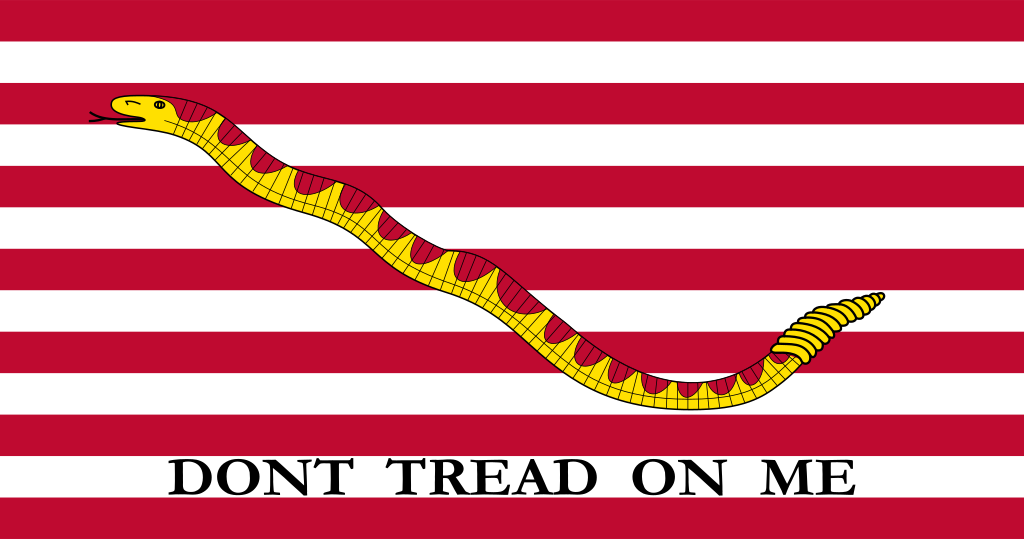
The First Navy Jack is one of America’s earliest symbols of unity, resistance, and self defense. It is commonly shown with thirteen red and white stripes, an extended rattlesnake, and the words “Don’t Tread on Me.” The stripes represent the original thirteen colonies. The rattlesnake represents a people who did not seek conflict, but would defend themselves when pushed too far.
The message was not about conquest. It was not about domination. It was not about looking for a fight.
It was a warning.
Leave us alone. Do not step on our rights. Do not force us into submission. Do not mistake restraint for weakness.
The rattlesnake had already become a powerful American symbol before the Revolution. In 1754, Benjamin Franklin published the famous “Join, or Die” cartoon, showing a snake cut into sections to represent the divided colonies. The message was simple. If the colonies remained divided, they would fail. If they stood together, they had a chance to survive. The cartoon later returned during the Stamp Act crisis and the American Revolution as a symbol of colonial unity.
For Paviti Tern, the Navy Jack speaks to a deeper truth. Veterans understand what it means to stand watch. They understand restraint. They understand warning. They understand the cost of being sent into conflict and then being left to carry the weight after coming home.
The Navy Jack is not just a flag. It is a reminder that freedom must be defended, but it should never be twisted into propaganda.
What Is the First Navy Jack?
The First Navy Jack is traditionally connected to the early Continental Navy during the American Revolution. Historical accounts note that in late 1775, as the first ships of the Continental Navy were being prepared, Commodore Esek Hopkins directed vessels to fly a striped jack and ensign. The exact design of those earliest flags is still debated by historians, but the familiar version with thirteen stripes, an uncoiled rattlesnake, and the words “Don’t Tread on Me” became the traditional image associated with the First Navy Jack.
That historical detail matters. The Navy Jack was not created as a modern political slogan. It came from a time when the colonies were fighting for independence from a distant power that tried to control their laws, trade, rights, and future.
The Navy Jack represented a people who wanted to be left alone to govern themselves.
It also represented unity. The rattlesnake stretched across the stripes is not isolated. It is placed over the thirteen colonies acting together. That is a major difference between the Navy Jack and many modern versions of “Don’t Tread on Me.” The original message was collective. It was about the colonies standing as one.
For veterans, this idea still carries weight. No one survives alone. No crew survives divided. No mission succeeds without trust. The Navy Jack reminds us that strength is not only found in fighting. Strength is also found in standing together before the fight ever begins.
Why a Rattlesnake?
The rattlesnake was a fitting symbol for early America. It does not usually attack without warning. It gives notice. It stands its ground. It wants space. If ignored or stepped on, it can strike.
That is why the phrase “Don’t Tread on Me” mattered. It was not a threat of world domination. It was a boundary.
The original message was this:
We are not coming for you.
We are not asking for your land.
We are not trying to rule you.
But if you step on us, we will defend ourselves.
That meaning is very different from the way the phrase is often used today.
The Navy Jack’s rattlesnake is long and extended. It is not curled into a tight attack position. It visually supports the idea of a warning. It says we are awake. We are united. We see what is happening. Do not push us past the point of peace.
The Gadsden Flag: Similar Words, Different Message
The Gadsden flag is the more widely recognized “Don’t Tread on Me” flag. It was designed in 1775 by Christopher Gadsden, a South Carolina delegate to the Continental Congress and a brigadier general in the Continental Army. The Gadsden flag features a coiled rattlesnake on a yellow field with the same words, “Don’t Tread on Me.”
The Gadsden flag also has roots in the American Revolution. It was not born as a modern symbol. But its design is different, and design affects meaning.
The Gadsden snake is coiled. It is tense. It is ready to strike. That is not the same visual message as the Navy Jack.
The Navy Jack shows a stretched rattlesnake across the thirteen stripes. It feels more like a warning from a united people. The Gadsden flag feels more like a direct confrontation. Both may come from the same Revolutionary period. Both use the same phrase. But they do not speak in the same tone.
The Navy Jack says: stand together, stay alert, do not start the fight, and do not allow yourself to be stepped on.
The Gadsden flag says: I am ready, I am coiled, and I am prepared to strike.
That difference is important. The Navy Jack points back to the original colonial struggle for self rule. It speaks to people who wanted to be left alone, not people who wanted to dominate others. It is the difference between self defense and aggression. It is the difference between truth and propaganda.
How the Message Was Changed
Over time, the Gadsden flag became the more popular version of “Don’t Tread on Me.” It is simpler, brighter, and easier to recognize. The yellow background and coiled snake create a strong visual image. That is part of why it spread so widely.
But popularity does not always protect meaning.
When a symbol is repeated enough, it can be pulled away from its original purpose. The Gadsden flag has been used by many different groups over time, including political movements. It has also appeared in controversial settings far removed from the original Revolutionary meaning. Because of that, the flag now carries different meanings depending on who is using it and where it appears.
That is where propaganda enters the story.
Propaganda takes a real symbol and bends it. It strips away the history. It removes the restraint. It turns a warning into a weapon. It takes “leave us alone” and turns it into “we are coming for you.”
The original “Don’t Tread on Me” was not a call to dominate the world. It was not a demand for power over others. It was a statement of human dignity and self rule.
It meant we have rights. We have a voice. We have a line that cannot be crossed.
Why This Matters to Veterans
Veterans know better than most people that symbols matter.
A flag can remind someone of service, sacrifice, brotherhood, grief, duty, pride, anger, and loss. A flag can bring people together. It can also be used to divide them.
For many veterans, the hardest part of coming home is not only what happened during service. It is also the feeling that the public does not understand what service did to them. A person can say “thank you for your service” with good intent, but still fail to understand the burden that veteran may be carrying.
That is why truth matters.
The truth is that many veterans return home with wounds that are not visible. The truth is that many veterans feel isolated. The truth is that suicide remains a serious crisis in the veteran community.
According to the Department of Veterans Affairs, 6,398 veterans died by suicide in 2023. That equals an average of 17.5 veteran suicides per day. In the same report, the VA stated that suicide was the second leading cause of death for veterans under age 45.
Those numbers are not propaganda. They are facts.
Behind every number is a person. A family. A friend. A crew member. A life that mattered.
The Navy Jack reminds us that truth must be faced directly. It reminds us that unity is not just a historical idea. It is a present need.
The Navy Jack and Paviti Tern
Paviti Tern honors the original meaning of the Navy Jack because it reflects the mission of standing with veterans instead of speaking over them.
The extended rattlesnake represents a warning, but it also represents patience. It represents restraint. It represents a clear line between peace and being pushed too far.
That message connects to the work of helping veterans tell their stories.
Veterans do not need empty slogans. They need places where they can speak the truth. They need spaces where their stories are heard without being cleaned up, softened, or turned into public relations language. They need support that does not disappear after a parade, a ceremony, or a holiday weekend.
The Navy Jack belongs here because it says what many veterans already understand:
We do not seek conflict.
We do not ask for pity.
We do not need propaganda.
We need truth, respect, and a place to stand together.
The Original Meaning Was “Leave Us Alone”
At its core, “Don’t Tread on Me” meant leave us alone.
It was not about forcing others into submission. It was not about becoming the thing America fought against. It was not about replacing one form of domination with another.
It was about refusing to be stepped on.
That is why the Navy Jack remains powerful. Its message has not expired. It still speaks to anyone who has been pushed aside, misunderstood, used, or forgotten.
For veterans, that message is personal.
Do not tread on those who served.
Do not reduce their stories to slogans.
Do not use their sacrifice as propaganda.
Do not ignore the cost of war after the war is over.
Listen. Learn. Stand with them.
Final Message
The First Navy Jack is not just an old flag. It is a reminder of what America claimed to stand for at the beginning: unity, freedom, restraint, and the right to be left alone.
The Gadsden flag may be more famous today, but the Navy Jack carries a deeper and more grounded message. It speaks less like a threat and more like a boundary. It does not ask for domination. It asks for respect.
That is the truth Paviti Tern stands with.
Veterans do not need propaganda. They need truth. They need support. They need community. They need a place where their stories are not only heard, but honored.
The Navy Jack reminds us that a warning is not hatred. A boundary is not aggression. Standing firm is not the same as seeking war.
It means this:
Do not tread on those who have already carried enough.